
Educational Guide

OET Writing Samples & Analysis

Learn what distinguishes a Grade B OET letter from a Grade C. This guide analyses the key characteristics of successful letters, common patterns in strong and weak responses, and what examiners look for in each section of your letter.

Get Your Letters Corrected

New · Grade B worked samples

Browse 20 Grade B sample letters by profession

Each sample includes realistic case notes, a complete Grade B letter, line-by-line examiner annotations, criterion-by-criterion scoring, and the common pitfalls for that profession.

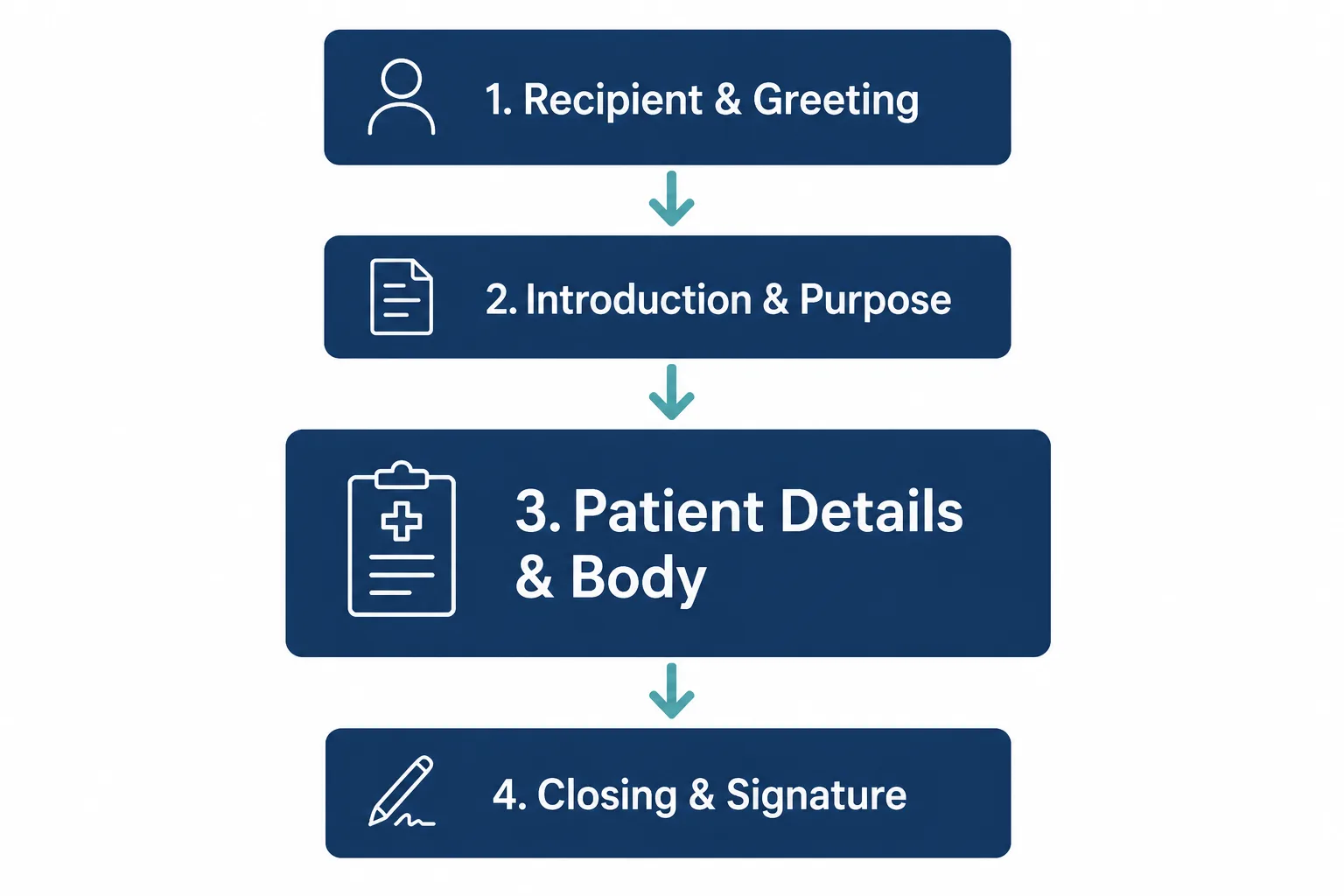
OET letter structure diagram: greeting, purpose, body, closing The six OET writing scoring criteria: purpose, content, conciseness, genre, organisation, language

Characteristics of a Grade B Letter

Grade B (score 350+) represents the standard required by most regulatory bodies. According to the official OET assessment criteria, a Grade B letter demonstrates consistent competence across all six criteria. Here are the defining features.

Clear, Immediate Purpose

The reader knows exactly why the letter was written within the first one or two sentences. The purpose is specific and actionable, not vague.

Selective Content

Only information relevant to the purpose and the reader is included. The candidate demonstrates clinical judgement by omitting unnecessary case note details.

Concise Expression

Ideas are expressed efficiently without unnecessary words or repetition. The letter is typically 180-200 words and feels complete, not padded or rushed.

Professional Tone

The language is appropriately formal without being stilted. The letter reads like genuine clinical correspondence between healthcare professionals.

Logical Organisation

Information flows naturally from purpose to background to current situation to request. Each paragraph has a clear function. Transitions are smooth.

Accurate Language

Grammar is consistently correct with only minor errors that do not impede understanding. Medical terminology is used accurately. Case notes are paraphrased, not copied.

Four Annotated OET Letter Samples

Below are four complete OET letters across discharge, referral, transfer, and advice formats — each written for a different healthcare profession. Annotations show what an examiner is rewarding, what they are flagging, and the score across all six criteria. Hover or read directly under each highlighted phrase for the examiner's note.

Annotation key: Strong (gains marks) Adequate (could be sharper) Loses marks
Sample 1 — Discharge Letter

Nurse → Community Nurse · Grade B (380)

Purpose 5/6 Content 4/6 Clarity 5/6 Genre 5/6 Organisation 4/6 Language 5/6

Case notes summary

Mrs Helen Carter, 72, admitted 5 days ago with community-acquired pneumonia. Treated with IV antibiotics, now stable on oral co-amoxiclav. Lives alone, mild osteoarthritis, daughter visits daily. Discharged today. Community nurse to monitor antibiotic compliance, reassess respiratory status in 3 days.

Dear Community Nurse,

I am writing to update you on Mrs Helen Carter, a 72-year-old patient discharged today following five days of inpatient treatment for community-acquired pneumonia.

On admission, Mrs Carter received intravenous antibiotic therapy and has since stabilised on oral co-amoxiclav, which she will continue for a further seven days. Her respiratory status is currently satisfactory, with normal saturation on room air.

Mrs Carter lives alone but has good family support, with her daughter visiting daily. She has a background of mild osteoarthritis, which is well managed.

I would be grateful if you could monitor her antibiotic compliance and reassess her respiratory status in three days. She is a very pleasant lady and I am sure she will follow your advice.

Yours sincerely,
Senior Staff Nurse

Strong opening (Purpose 5/6): Letter type, patient, age, and clinical context all in one sentence — the recipient knows exactly what this letter is in 10 seconds.
Adequate social context (Content 4/6): Living situation is relevant for community follow-up, but the daughter detail could be tightened — does the community nurse need to know the visit cadence? A Grade A version would be: "She is supported by her daughter who provides daily contact."
Specific, actionable request (Purpose 5/6): Two clear actions tied to a timeframe. This is exactly what the closing should do.
Register slip costs marks (Genre 5/6, not 6/6): "She is a very pleasant lady" is conversational, not professional clinical correspondence. This single sentence pulls Genre & Style from 6 to 5. Removing it would push the letter from 380 to ~395.
Sample 2 — Referral Letter

GP → Cardiologist · Grade B (370)

Purpose 5/6 Content 4/6 Clarity 4/6 Genre 5/6 Organisation 4/6 Language 5/6

Case notes summary

Mr James Patel, 58, presents with intermittent chest pain for 3 weeks, worse on exertion, occasional radiation to left arm. PMH: type 2 diabetes (8 years), hypertension. Smoker (15/day). ECG normal at rest. Father MI age 60. Refer to cardiology for assessment.

Dear Dr Specialist,

I am writing to refer Mr James Patel, a 58-year-old gentleman, for cardiology assessment of suspected angina.

Over the past three weeks, Mr Patel has reported intermittent central chest pain that is exacerbated by exertion and occasionally radiates to his left arm. A resting ECG conducted in clinic was unremarkable.

His relevant medical history includes type 2 diabetes mellitus, diagnosed eight years ago, and longstanding hypertension. He is a current smoker with a fifteen-cigarette daily habit. Of particular note, his father suffered a myocardial infarction at the age of 60.

Given the combination of his symptoms, cardiovascular risk factors, and family history, I would appreciate your urgent assessment and consideration of further investigations such as exercise tolerance testing or angiography.

Please do not hesitate to contact me should you require any further information.

Yours sincerely,
Dr GP

Textbook opening (Purpose 5/6): Action (refer), patient, age, specialty, and provisional diagnosis. A Grade A version might add "for outpatient" to specify urgency level.
Hedging language (Clarity 4/6): "Unremarkable" is slightly indirect for clinical correspondence. "Normal" or "showed no acute changes" would be sharper. Small effect, but pattern repeats across the letter.
Risk-factor signposting (Content 4/6): "Of particular note" flags clinical significance. This is the kind of signposting that distinguishes a clinician's letter from a list of facts.
Summative reasoning + specific request (Purpose 5/6, Organisation 4/6): The closing recapitulates the rationale and asks for specific actions. Examiners reward this strongly. Suggesting investigations is appropriate at GP→specialist level.
Sample 3 — Transfer Letter (Below Grade B)

Ward Nurse → Rehab Nurse · Grade C (320)

Purpose 3/6 Content 3/6 Clarity 3/6 Genre 4/6 Organisation 3/6 Language 4/6
Why we included a Grade C sample: Most candidates miss Grade B not because of grammar but because of the patterns shown below. Studying a near-miss letter is more diagnostic than studying another Grade B letter.

Case notes summary

Mr David Wong, 68, post-CABG day 5, transferring from cardiac ward to rehabilitation ward. Stable, mobilising with assistance. Wound healing well. Diabetic, on metformin. Wife to be involved in discharge planning. Continue physio twice daily, monitor sternal wound, BP twice daily.

Dear Nurse,

Mr David Wong, 68 years old, will be transferred to your ward today. He had CABG surgery 5 days ago. He is doing well now and the doctors said he can move to rehabilitation.

Patient name: Mr David Wong. Age: 68. PMH: Diabetes. Medications: Metformin. Operation: CABG day 5. Mobility: with assistance. Wound: healing well. Wife: involved.

Please continue physio two times daily and monitor his sternal wound. Also please check his BP two times daily because he is diabetic.

Hope this is OK. If you have any questions just let me know.

Thanks,
Ward Nurse

Missing purpose statement (Purpose 3/6): "Will be transferred to your ward today" states a fact but not a purpose. The opening should be: "I am writing to hand over the care of Mr Wong, who is being transferred today following uncomplicated recovery from CABG five days ago."
Bullet-style listing of case notes (Content 3/6, Organisation 3/6): This is the single most common Grade B blocker. Case notes are reproduced as a list rather than woven into prose. Examiners cannot give marks for content or organisation when the candidate has not actually composed a letter.
Missed clinical reasoning (Content 3/6): "Check his BP because he is diabetic" — diabetes alone does not justify BP monitoring; post-cardiac surgery does. The candidate has missed the clinical link.
Casual closing (Genre 4/6): "Hope this is OK" and "Thanks" are SMS-register. Even strong-grammar candidates often slip here because the body of the letter feels finished. The closing must remain professional throughout.
Sample 4 — Advice Letter

Pharmacist → Patient's Mother · Grade B (360)

Purpose 5/6 Content 4/6 Clarity 4/6 Genre 4/6 Organisation 4/6 Language 5/6

Case notes summary

Tommy Davies, 7, prescribed amoxicillin oral suspension for acute otitis media. Mother: Mrs Davies. Dose: 5ml three times daily for 7 days. Shake well before use. Refrigerate. Complete full course. Watch for rash. Address letter to mother.

Dear Mrs Davies,

I am writing to provide guidance on the safe administration of the amoxicillin suspension prescribed for Tommy's ear infection.

Tommy should be given 5ml of the medicine three times daily for seven days. It is important that the full course is completed even if Tommy begins to feel better, as stopping early can lead to the infection returning.

Please remember to shake the bottle well before each dose, as the medicine settles on standing. The bottle should be kept in the refrigerator between uses to maintain its effectiveness.

Although amoxicillin is generally well tolerated, please monitor Tommy for any signs of an allergic reaction, particularly a rash. Should this occur, stop the medication and contact your doctor immediately.

Please do not hesitate to ask if you have any questions about Tommy's treatment.

Yours sincerely,
Pharmacist

Patient-appropriate register (Purpose 5/6): Letters to non-clinical recipients require simpler vocabulary without becoming patronising. "Guidance on safe administration" is professionally pitched without being technical.
Safety reasoning included (Content 4/6): Telling the mother *why* to complete the course (not just *to* complete it) is exactly the clinical communication skill being tested. Examiners reward reasoning, not just instruction.
"Effectiveness" is slightly clinical (Genre 4/6): For a parent, "to keep it working properly" or "to keep it fresh" would be more appropriate. Small register issue.
Clear safety net (Purpose 5/6): "Stop the medication and contact your doctor immediately" is an unambiguous safety instruction. Examiners specifically check for this in advice letters.

What these four samples have in common

All three Grade B letters open with "I am writing to..." followed by an action verb (update, refer, provide guidance). All three close with a specific instruction or follow-up action. The single Grade C letter does neither — its opening states a fact, and its closing is conversational. These two patterns alone account for most of the gap between Grade B and Grade C in practice.

Get your letter analysed like this

Analysing Openings: Strong vs Weak

The opening sentence is the most critical part of your letter. It sets the tone and immediately tells the examiner whether you have understood the task. Here are the patterns that distinguish Grade B openings from weaker attempts.

Weak Opening Patterns

  • Vague purpose
    "I am writing to inform you about a patient."
    Issue: No specific reason for writing. The reader does not know what action is needed.
  • Delayed purpose
    "The patient is a 45-year-old male who presented to the emergency department on 12 March..."
    Issue: The purpose is buried. The letter begins with clinical details before establishing why it was written.
  • Copied case notes
    "Patient name: John Smith. DOB: 15/03/1978. Presenting complaint: chest pain."
    Issue: Case notes are reproduced verbatim. This is not a letter; it is a list.

Strong Opening Patterns

  • Specific referral request
    "I am writing to refer Mrs Chen for physiotherapy assessment following her recent hip replacement surgery."
    Strength: Clear purpose (referral), specific action (physiotherapy assessment), and relevant context (hip replacement) all in one sentence.
  • Discharge with context
    "I am writing to inform you that your patient, Mr Ahmed, has been discharged following a three-day admission for management of an acute asthma exacerbation."
    Strength: Establishes the letter type (discharge), identifies the patient, and provides the key clinical context immediately.
  • Transfer with urgency
    "I am writing to request an urgent transfer of Mrs Patel to your cardiac care unit for specialist management of unstable angina."
    Strength: Purpose (transfer), urgency level, destination, and clinical reason are all clear in the opening.

Body Paragraphs: What Examiners Expect

The body of your letter is where most marks are won or lost. Strong body paragraphs demonstrate clinical judgement, professional language, and clear organisation.

What Strong Body Paragraphs Do

  • Group related clinical information logically (e.g., history in one paragraph, current status in the next)
  • Paraphrase case notes into natural clinical prose rather than copying bullet points
  • Include only information the specific reader needs to act on
  • Use appropriate medical terminology without over-simplifying or over-complicating
  • Maintain consistent verb tenses (past for history, present for current status)
  • Connect ideas with appropriate linking words and transitions

What Weak Body Paragraphs Do

  • List all case note information without selection or prioritisation
  • Copy case notes verbatim or change only one or two words
  • Present information in the same order as the case notes rather than a logical clinical order
  • Include irrelevant details that distract the reader from the purpose
  • Switch between tenses inconsistently within the same paragraph
  • Use overly casual or overly complex language that does not match clinical correspondence

Closing Your Letter Effectively

The closing paragraph is your final opportunity to demonstrate professional communication. A strong closing reinforces the purpose of your letter and specifies what happens next.

Include a specific action or request

Tell the reader exactly what you need them to do. 'I would appreciate your assessment and ongoing management' is stronger than 'Please see the patient'.

Offer to provide further information

A professional offer such as 'Please do not hesitate to contact me if you require further information' demonstrates appropriate clinical courtesy.

Acknowledge urgency when appropriate

If the clinical situation is urgent, the closing should reflect this: 'I would appreciate an urgent review given the patient's deteriorating condition'.

Avoid generic or empty closings

Closings such as 'Thank you for your time' or 'I look forward to hearing from you' without a specific request are considered weak by examiners because they do not demonstrate clinical communication skills.

Why Memorising Sample Letters Does Not Work

Many candidates look for sample letters to memorise. This approach consistently fails because OET specifically tests your ability to adapt to unique clinical scenarios. Every writing task has different case notes, a different recipient, and a different purpose.

  • Examiners are trained to identify memorised or templated responses
  • Memorised content rarely matches the specific case notes, leading to irrelevant information
  • The content selection criterion specifically rewards clinical judgement, which memorisation bypasses
  • Practising with feedback builds transferable skills; memorisation does not

Instead of memorising, learn the structural principles that apply to every letter type and practise applying them to different case notes. This builds the adaptable skill set that examiners reward.

The Better Approach

1
Learn the letter structure and assessment criteria
2
Practise with different case notes each time
3
Submit for professional correction
4
Study the feedback and identify error patterns
5
Rewrite incorporating feedback before trying new cases

Frequently Asked Questions

Where can I find official OET writing samples?
Official OET sample materials are available on the OET website (oet.com). These include sample case notes and writing tasks for each profession. Understanding the assessment criteria and studying the characteristics of Grade B letters is more effective than memorising sample responses.
What does a Grade B OET letter look like?
A Grade B letter has a clear purpose statement in the opening sentence, selects only relevant information from case notes, uses appropriate professional tone throughout, is logically organised with distinct paragraphs, paraphrases case notes rather than copying them, and includes a specific request or recommendation in the closing.
Should I memorise sample OET letters?
No. Memorising sample letters is counterproductive because every OET writing task has unique case notes and a specific recipient. Examiners can identify memorised or templated responses. Instead, learn the structural principles and practise applying them to different scenarios.
How can I check if my OET letter would achieve Grade B?
The most reliable method is to submit your practice letters for professional correction by teachers who understand the OET assessment criteria. The Writing Correction Service provides feedback against all six OET criteria: overall task fulfilment, content, conciseness, genre, organisation, and language.

Get Expert Feedback on Your Letters

Stop guessing whether your letters meet Grade B standard. Dr Mariam's OET writing team provides detailed feedback against all six OET assessment criteria, showing you exactly what to improve.

View Correction Packages