Pharmacist · Advice letter to GP · 3 bands compared
OET Pharmacist: Grade A vs B vs C Letters Compared (Advice letter to GP)
Three letters written to the same GP case are presented at three different bands. Each letter responds to identical case notes to show what separates Grade A, B and C performance.
In short
- →Band A: complete, targeted recommendations; clear next steps for urgent INR management.
- →Band B: adequate clinical content but misses precise thresholds and some organisation.
- →Band C: important omissions, vague requests and language problems reduce patient safety clarity.
The shared case notes
Mrs A Patel, 72, attends the community pharmacy with minor bruising three days after starting trimethoprim for a urinary infection. She is on warfarin 3 mg daily for atrial fibrillation, amiodarone 200 mg three times weekly and simvastatin 20 mg nocte. The pharmacist measured an INR of 6.2 today. Mrs Patel reports no major bleeding, feels well, and received advice to withhold today’s warfarin dose and to attend GP for review. Relevant allergies: none. No recent changes in diet or alcohol intake noted.
The three letters at a glance
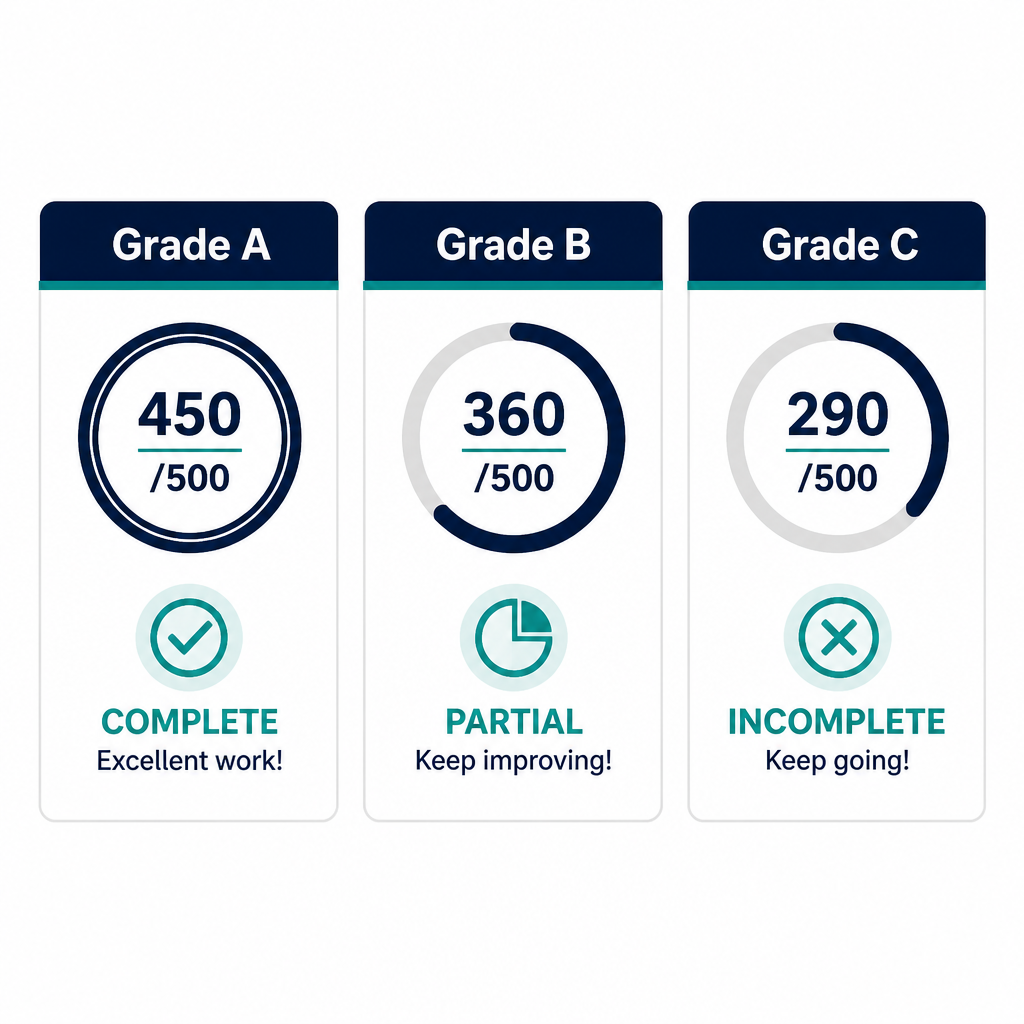
The three letters — same case, different bands
Grade A
450/500Dear Dr Smith
Re: Mrs A Patel, DOB 03/09/1953 — urgent review requested following raised INR (6.2) measured at our pharmacy today. Current medicines: warfarin 3 mg daily, amiodarone 200 mg three times weekly, simvastatin 20 mg nocte. Trimethoprim 200 mg twice daily was started three days ago for suspected UTI elsewhere. Mrs Patel reports minor bruising but no major bleeding.
I advised her to withhold today’s warfarin dose and to avoid NSAIDs. Please could you review anticoagulation urgently: check INR within 24 hours and consider withholding further warfarin until INR falls. Given interacting antibiotic and concomitant amiodarone, please consider a temporary dose reduction or supervised interruption. If INR ≥8 or any clinically significant bleeding develops, consider oral vitamin K per local protocol. Please document changes and advise patient on bleeding signs. I can arrange repeat INR testing through the pharmacy if helpful. Please contact me for further details.
Kind regards Mariam Khan, Pharmacist Community Pharmacy
Verdict: Band A. The letter provides complete, relevant clinical details, clear, prioritized actions and safety thresholds. Recommendations are appropriate, concise and professionally phrased, with an offer to help — matching 2018 criteria under the 2026 stricter scoring.
Grade B
360/500Dear Dr Smith
Re: Mrs A Patel, DOB 03/09/1953. Mrs Patel presented to pharmacy with bruising after starting trimethoprim for a urinary infection. Her INR measured 6.2 today. Current medicines include warfarin 3 mg daily, amiodarone and simvastatin. She has had no major bleeding but is concerned.
I told her to omit today’s warfarin dose and come to GP for review. Please could you review her warfarin and decide on dose changes and repeat INR soon. Trimethoprim is likely interacting with warfarin. If you feel urgent reversal is needed, please follow local protocols. Also please advise her about avoiding NSAIDs and when to seek emergency care. I can provide the pharmacy INR result to your practice if required.
Regards Mariam Khan, Pharmacist Community Pharmacy
Verdict: Band B. The letter communicates the main problem and reasonable actions but omits precise safety thresholds and a clear timeframe for INR re-check. Organisation is adequate though less specific and slightly wordy.
Grade C
290/500Dear Doctor
Re: Mrs A Patel. Patient came to pharmacy with bruises after taking an antibiotic. Her INR was high. She is on warfarin and other tablets. She was told not to take warfarin today.
Please see her and do what you think is needed with warfarin and repeat tests. The antibiotic may be a problem. Tell her if she must stop medicines or go to hospital. Pharmacy can give you the INR number if you want it.
Yours M. Khan, Pharmacist Community Pharmacy Contact: 01234 5678900
Note: patient worried about bruising and wants help soon, please act promptly as advised above and inform pharmacy of plan when able to do so.
(End of note.)
Verdict: Band C. The letter is vague and disorganised, missing key clinical details (no exact INR in the body, poor medication list) and clear action thresholds. Language is imprecise and repetitive, reducing safety and clarity per the 2018 criteria under the 2026 regime.
Criterion-by-criterion: Grade A vs B vs C
| Criterion | Grade A | Grade B | Grade C |
|---|---|---|---|
| Purpose | Crystal-clear urgent advice request with defined patient identifiers and aim. | Purpose stated but lacks precise urgency markers and timeframe. | Unclear purpose; request expressed vaguely without definite clinical aim. |
| Content | All relevant clinical details, interactions, measured INR and clear recommendations. | Key facts present but some thresholds and medication detail are omitted. | Important details missing; medication and safety information incomplete. |
| Conciseness & Clarity | Concise, prioritised instructions; minimal irrelevant information. | Generally clear but slightly wordy and less prioritised. | Wordy, repetitive or vague; major clarity issues affecting actionability. |
| Genre & Style | Professional, clinical tone with appropriate recommendations and offers of help. | Professional but slightly informal; recommendations less precise. | Tone inconsistent; some informal phrasing and unprofessional elements. |
| Organisation & Layout | Logical structure: problem, meds, pharmacist actions, explicit requests. | Acceptable structure but transitions and priorities could improve. | Disorganised layout; missing headings and muddled sequence of actions. |
| Language | Accurate clinical vocabulary, correct grammar and precise phrasing. | Generally good vocabulary with occasional grammatical slips. | Frequent language errors and imprecise vocabulary hinder comprehension. |
How to lift this letter one band
C → B: For this pharmacist scenario the main lift is completeness and clarity. Add exact clinical data (INR value, full medicine list, antibiotic dose and start date) and remove repetition. Give a clear single recommendation with a reasonable timeframe, for example 'review INR within 24 hours' rather than vague requests. Use professional, confident language and avoid conversational filler. A short offer to assist (e.g. provide INR record or arrange pharmacy testing) improves collaboration.
B → A: Tighten prioritisation and precision. State safety thresholds and immediate actions (when to consider oral vitamin K or emergency care) and justify them briefly. Present the plan in clear steps: what pharmacist has done, what GP should do next, and expected timing. Use exact medication names and doses, and sign off with contact details and willingness to follow up. These moves convert adequate advice into an authoritative, safe clinical communication.
2026 update
What changed in 2026 for Pharmacist band scoring
From 2026 the application of the 2018 OET writing criteria is stricter: examiners expect clearer safety-focused recommendations and explicit timeframes in clinical letters from pharmacists. Greater weight is given to risk mitigation, clear action steps and precise medication details.
For pharmacists this means letters that omit thresholds, fail to prioritise urgent actions or leave ambiguity about who will do what are more likely to drop a band. Demonstrable patient-safety language and concise, organised instructions are now essential to achieve Grade A.
Frequently asked questions
Should a pharmacist state the INR value in the letter?
Yes. Include the exact INR, measurement date/time and any bleeding signs to allow informed clinical decisions.
Can a pharmacist recommend withholding warfarin?
Yes. State what you advised the patient and request GP review. Recommendations must be clear and justified.
How much medication detail is needed?
Provide drug names, doses, frequency and recent changes — include interacting medicines and start dates.
What tone suits an advice letter to a GP?
Professional, concise and collaborative: offer assistance but avoid prescriptive or informal language.
Do I need to mention local protocols?
Refer to local protocols when relevant (e.g. vitamin K use) and indicate that GP should follow their trust guidance.
How do I show urgency in the letter?
Use clear timeframes (e.g. 'review within 24 hours'), state safety concerns and offer immediate follow-up options.
Keep learning
Scoring criteria
See if your pharmacist letter is at Grade C, B, or A.
See OET Writing Correction packs →