Doctor (GP) · Referral to specialist · 3 bands compared
OET Doctor (GP): Grade A vs B vs C Letters Compared (Referral to specialist)
Three referral letters written from the same GP case notes to a cardiology clinic, shown at Bands A, B and C. Read how differences in content selection, clarity and request precision change the band.
In short
- →Band A: focused clinical summary, clear request and appropriate urgency.
- →Band B: adequate information but misses some priority details and clarity.
- →Band C: incomplete history, unclear request and poor organisation reduce score.
The shared case notes
Mr S, 58, attends with 3 months of exertional chest tightness and intermittent palpitations. Hypertension controlled on lisinopril; BMI 29; 15-pack-year smoker. Family history: father died of myocardial infarction at 62. Resting ECG: LVH and occasional PVCs. Troponin (same-day) normal. BP 132/78, resting HR 86. Lipids borderline; no current statin. Episodes last 2–10 minutes, non-radiating, relieved by rest. No syncope, no fever. GP requests cardiology input regarding next investigations and management, including risk stratification for ischaemic heart disease and assessment for arrhythmia.
The three letters at a glance
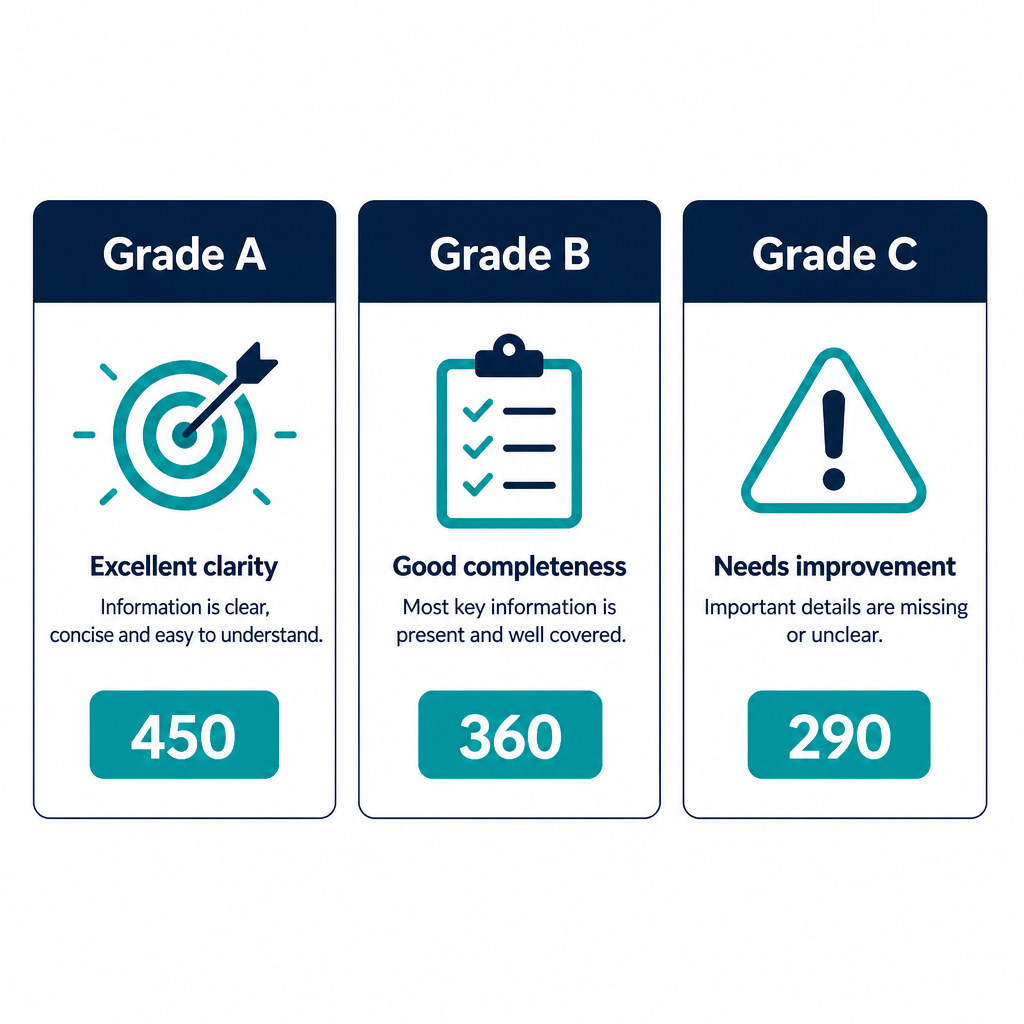
The three letters — same case, different bands
Grade A
450/500Dear Cardiology Team,
I refer Mr S, a 58-year-old man with a 3-month history of exertional chest tightness and intermittent palpitations. Cardiovascular risk factors: hypertension (lisinopril), BMI 29, 15-pack-year smoking history and a first-degree family history of premature ischaemic heart disease. Examination today: BP 132/78 mmHg, HR 86 bpm, no peripheral oedema. Resting ECG shows left ventricular hypertrophy with occasional premature ventricular complexes. Same-day high-sensitivity troponin was negative. Lipids are borderline and he is not yet on a statin. Symptoms last 2–10 minutes, relieved by rest; no syncope.
Please advise on urgent cardiology assessment for suspected stable angina and investigation for arrhythmia. Specifically, would you arrange outpatient exercise stress testing (or pharmacological imaging) and 24–48 hour ambulatory ECG (Holter)? Please advise on initiation of antiplatelet/statin therapy pending review and whether pre-referral beta-blocker therapy is appropriate. Patient is currently stable and able to attend clinic. Thank you for your assessment and recommended plan.
Verdict: This letter meets Band A: succinct, clinically focused, and prioritises relevant findings. It includes clear requests for investigations and management, appropriate urgency, and safe continuation/consideration of therapy. Language is precise and professional; organisation facilitates reviewer action.
Grade B
360/500Dear Consultant,
I refer Mr S, 58, with a three-month history of chest tightness on exertion and intermittent palpitations. He has hypertension on lisinopril, is overweight and smokes about 15 cigarettes daily. His father had heart disease. Examination today showed BP 132/78 and HR 86. Resting ECG showed signs of LVH and occasional PVCs. Troponin was negative. Lipids are borderline and he is not on a statin. Episodes generally last a few minutes and settle at rest.
Please could you assess him for ischaemic heart disease and arrhythmia? We would appreciate advice on appropriate tests such as exercise ECG or imaging and ambulatory monitoring, and guidance on starting statin or antiplatelet therapy before review. He is currently stable and can be seen as an outpatient. Please let me know any urgent actions I should take meanwhile.
Verdict: Band B: the letter provides relevant history and reasonable investigation suggestions, but is less precise on urgency and investigation choice. Some organisation is weaker and management requests are general rather than targeted, reducing clarity and impact.
Grade C
290/500Dear Cardiology,
I am referring Mr S, aged 58, with chest pain and palpitations for several months. He has high blood pressure and takes lisinopril. He smokes and his father had heart problems. ECG shows some abnormality and there were extra beats. Troponin was not raised. He feels breathless sometimes and the pain lasts a few minutes.
Please see him and do tests for his heart. He is not on a statin. Tell me what to do and whether he needs any medicines now. He is able to attend clinic. Please let me know if urgent review required. Many thanks, GP practice secretary will organise appointment details if needed for clinic triage and follow-up arrangements at your convenience. Regards, Dr G.P.
Verdict: Band C: important clinical details are vague or omitted and the request lacks focus. Organisation and tone are inconsistent; unnecessary phrasing and delegation reduce clarity. Language errors and incomplete investigation suggestions limit clinical usefulness.
Criterion-by-criterion: Grade A vs B vs C
| Criterion | Grade A | Grade B | Grade C |
|---|---|---|---|
| Purpose | Crystal-clear referral purpose with explicit clinical question and urgency. | Purpose evident but lacks specific clinical question or precise urgency. | Referral purpose unclear or vague; clinical question not defined. |
| Content | All relevant history, examination and investigations included and prioritised. | Contains key information but omits some relevant details or priorities. | Significant omissions of history, tests or risk factors affecting decisions. |
| Conciseness & Clarity | Concise, focused sentences; no irrelevant information; very clear. | Generally clear but some wordiness or slightly unfocused sentences. | Wordy or disjointed; unclear sequencing reduces readability. |
| Genre & Style | Professional GP referral style with correct tone and clinician-to-clinician voice. | Appropriate style but occasional informal phrasing or tone lapse. | Inconsistent professional tone; some inappropriate or casual phrasing. |
| Organisation & Layout | Information well-ordered: summary, findings, clear request, closing. | Reasonable structure but transitions or prioritisation could be improved. | Poor organisation; information scattered and action points unclear. |
| Language | Accurate medical language, precise vocabulary and error-free grammar. | Mostly accurate language, few minor grammar or lexical errors. | Frequent language issues that hinder precise clinical interpretation. |
How to lift this letter one band
To take a Grade C letter to Grade B, focus on adding missing clinical detail and organising it logically. Ensure core risk factors (smoking, family history), vital signs, ECG and troponin results are stated clearly. Specify the suspected diagnoses (eg stable angina, possible arrhythmia) and suggest appropriate investigations (exercise test, ambulatory ECG). Remove irrelevant text and adopt a concise clinical tone.
To move a Grade B to Grade A, tighten clarity and prioritisation. State a precise clinical question and urgency (eg outpatient non-urgent vs 2-week chest pain pathway), prioritise investigations with rationale, and give brief instructions about immediate management (eg whether to start statin or antiplatelet). Use precise medical terminology and ensure no ambiguity about what response or action you expect from the specialist.
2026 update
What changed in 2026 for Doctor (GP) band scoring
From 2026 the application of the 2018 OET writing criteria became stricter for clinical professions. Examiners now place greater emphasis on prioritisation, precise clinical requests and immediate safety actions relevant to the profession.
For doctors this means referral letters must show clear diagnostic thinking, targeted investigation plans and concise management requests. Language accuracy and organisation have increased weighting; ambiguous or irrelevant content is penalised more heavily under the revised scoring approach.
Frequently asked questions
How long should an OET referral letter be?
Aim for 160–200 words: enough to include relevant history, findings, and a clear request.
What is the most important part of a GP referral letter?
A concise clinical question and clear requested action from the specialist, with key findings to support it.
Should I suggest investigations in the referral?
Yes. Suggest appropriate investigations and state urgency, but avoid prescribing definitive specialist tests.
How formal should the tone be?
Use a professional, clinician-to-clinician tone: concise, objective and free from casual language.
Do I need to include social details like smoking?
Include relevant risk factors (smoking, family history) when they affect diagnosis or management.
What common errors lower the band?
Omissions of key findings, unclear requests, poor organisation and frequent language inaccuracies.
Keep learning
See if your doctor (gp) letter is at Grade C, B, or A.
See OET Writing Correction packs →